
Fabricated aquatic life made from mouldable bioplastic, presented through the language of aquarium culture and online commerce.
Ashton Reefer is a commissioned video work by Matty Rimmer for Material Change, Sculpture Placement Group’s programme supporting artists to explore material experimentation as a form of shared knowledge.
The work takes the form of a fictional YouTube aquarium channel, adopting the familiar visual language of online reef sellers and aquascaping influencers. Within this format, a series of aquatic creatures (fabricated from bioplastic) are presented for display, care and consumption. The tone echoes a mode of pseudo-conservationism common to coral culture online, where ecological concern, commodity aesthetics and technical expertise blur into one another.
Rimmer’s long-standing engagement with aquariums and aquascaping frames the domestic tank as a managed world: a contained ecosystem shaped by human responsibility, desire and control. In Ashton Reefer, this logic is extended to bioplastics, a material often positioned as an ethical solution within narratives of sustainability. Rather than offering resolution, the work sits deliberately at a point of tension asking what it means to substitute one material regime for another without interrogating the systems of care, extraction and display that remain intact.
By working through the persona of “Ashton Reefer,” the video foregrounds mediation and performance: the role of the seller, the influencer, the educator. Knowledge is circulated, but always alongside branding, spectacle and consumption. Within Material Change, the work functions both as a creative response and as a prompt, raising questions about how bioplastics operate in practice, how they are aestheticised, and how responsibility is staged within human-made ecologies.
This commission contributes to Material Change’s wider aim of supporting artists to test materials not only for their technical properties, but for the cultural, ethical and political narratives they carry.
Within aquascaping culture, materials are often framed through optimisation, clarity, longevity, control and visual impact. Bioplastics enter this space with an ambiguous status: marketed as sustainable alternatives, yet rarely discussed in relation to long-term use, degradation, or the environments they inhabit.
The sculptures in Ashton Reefer are made using PCL (polycaprolactone), a mouldable thermoplastic that softens when heated and can be shaped by hand before hardening again as it cools. Available in different colours, PCL allows Rimmer to construct and manipulate the artificial aquatic forms featured in the work.
PCL is also used in aquarium and reef-keeping applications, where mouldable thermoplastics can be used to create and repair structures within aquatic environments. Its use in Ashton Reefer connects the material’s practical properties with the work’s wider questions around synthetic ecosystems, care and the relationship between material choice and ecological responsibility.
Acrylic, polycarbonate, and food-grade polyethylene are safe plastics for aquariums
If you’re interested in developing your own bioplastics, here’s a few places to start:
Ashton Reefer adopts the format of a YouTube coral vendor. What does this platform allow you to do conceptually that a gallery or exhibition space does not?
I guess it just lets me be more literal with my references, or if not encourages it. Most of what I explore in Ashton Reefer is present in previous projects, but by adopting moving image, I can be more on the nose with the YouTube reef aquarium subculture reference.
The work sits close to a language of care and conservation, but never fully settles there. How intentional is that ambiguity?
Partially intentional but probably also to do with the script being improvised. The subject of care and conservation in YouTube reef aquarium vendors is hard to summarise, but a common approach of these individuals is an intense passion and knowledge for care of corals, but a lack of subjectification of them as organisms. Their extinction is occasionally mentioned and that most could see aquariums as their new habitat in the near future, but the rest of the time they are celebrated for their aesthetic, expense, rarity and availability.
Hobbyists are quite different, they anthropomorphise their corals as pets and speak of how long they have kept them, name them etc but in the end it often serves the same purpose of encouraging you to buy live coral. I hope this explains the ambiguity.
What drew you to bioplastics for this project, and how do you understand their role within broader narratives of sustainability?
What drew me to bioplastic goes a way back and it was more what I had already sculpted using it that governed this project. Materially I was interested in using UV light and neon colour. I started illuminating my sculptures with blacklights in 2023 with Pet Rock and more intensely in 2024 So Excited to Finally Meet You, which were more aesthetic rather than conceptual choices, but in Aston Reefer I use the environment of reef aquarium studios bathed in violet light as a narrative.
My use of bioplastic is driven by sustainability; it was a turning point in my practice that allowed me to align my work with the care I wish to enact on a world suffering from toxicity. They allow me to explore the at times biological, and at others synthetic quality of plastic, safe in the knowledge that the material is inert so won’t harm the ecosystems they could be a part of.
Reef keeping often presents itself as ecological stewardship. Where do you see responsibility genuinely enacted, and where does it become performative?
I think coral farms are a good example to sum up my confusion and suspicion about this. Most are situated in The Coral Triangle where there is a long history of poaching for the aquarium trade; Indonesia, Malaysia, Papua New Guinea, Philippines, Solomon Islands, and Timor-Leste. During a job interview I spoke to the manager of an aquarium shop who told me of the progression of some of their previous staff who moved on to work at private coral farms in Indonesia rearing coral to be shipped to their UK stores. On behalf of the company they boasted the farms were tackling coral poaching, mentioning that before it was built it was common practice for natives to blow up entire reefs with dynamite to obtain coral. She left out why they wanted this coral, but it doesn’t take much digging to discover that the western aquarium trade has been auctioning for corals from this region way beyond the conception of coral farms, so it’s safe to assume it was to appease the western aquarium trade.
This instance highlights the performative greenwashing enacted by the aquarium trade that uses coral farms as a moral solution to poaching while not holding itself to account for enabling it in the first place, positioning itself as a white savior. After that conversation I was happy to hear my application was unsuccessful.
How does working with fabricated organisms shift your thinking about care, maintenance and obligation within enclosed ecosystems?
This amused me because it reminded me of all the times well meaning people have asked me the question ‘why no fish?’ some being surprised or disappointed to witness the inanimate lifeless aquarium i have presented. It kind of goes back to my answer about bioplastics and sustainability; i dont feel comfortable critiquing something that i am replicating, so I choose to imagine and manifest life into fabricated objects that act as vessels for real endangered species.
How does this commission extend or complicate your existing work with aquariums and sculptural ecosystems? What kinds of knowledge—practical, speculative or critical—do you hope viewers take from Ashton Reefer within the context of Material Change?
I want to bear witness to the image of a synthetic habitat. For lack of research I can’t speak for species other than those dealt in the aquarium trade, but my guess is that captive environments are the fate of many endangered species including coral and fish. A thought that haunts my practice is the anthropomorphism of cages. The human response to cages, vivariums, aquariums etc has us place ourselves within, imagining feelings of claustrophobia and imprisonment.
Sometimes the answer is clear; there have been a few instances of zoos attempting to captivate Great White Sharks who haven’t survived longer than a couple days, which despite this (and the science behind why they need an ocean to survive) tragically hasn’t discouraged other zoos from trying again. But how do we decipher mistreatment in captivity if the animal in question resides in even more confined spaces in their natural habitat? This is a dichotomy of science and aesthetic based on what environments humans perceive as desirable to them and projecting that onto other animals.
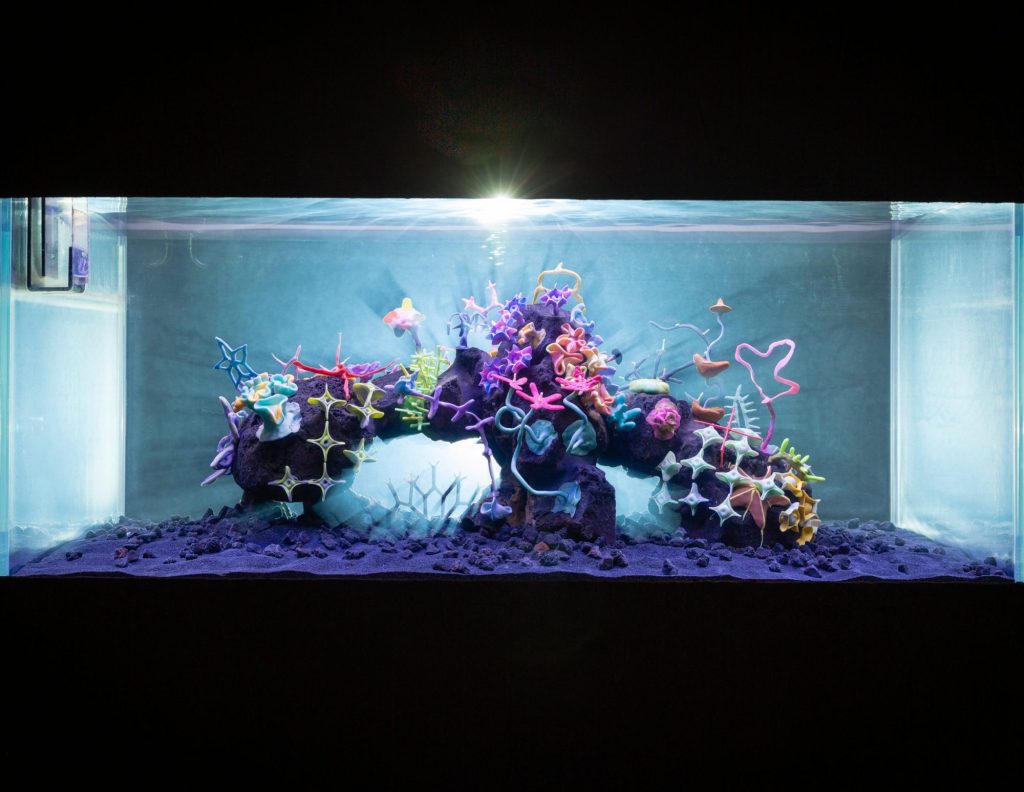
Image credit: Eoin Carey
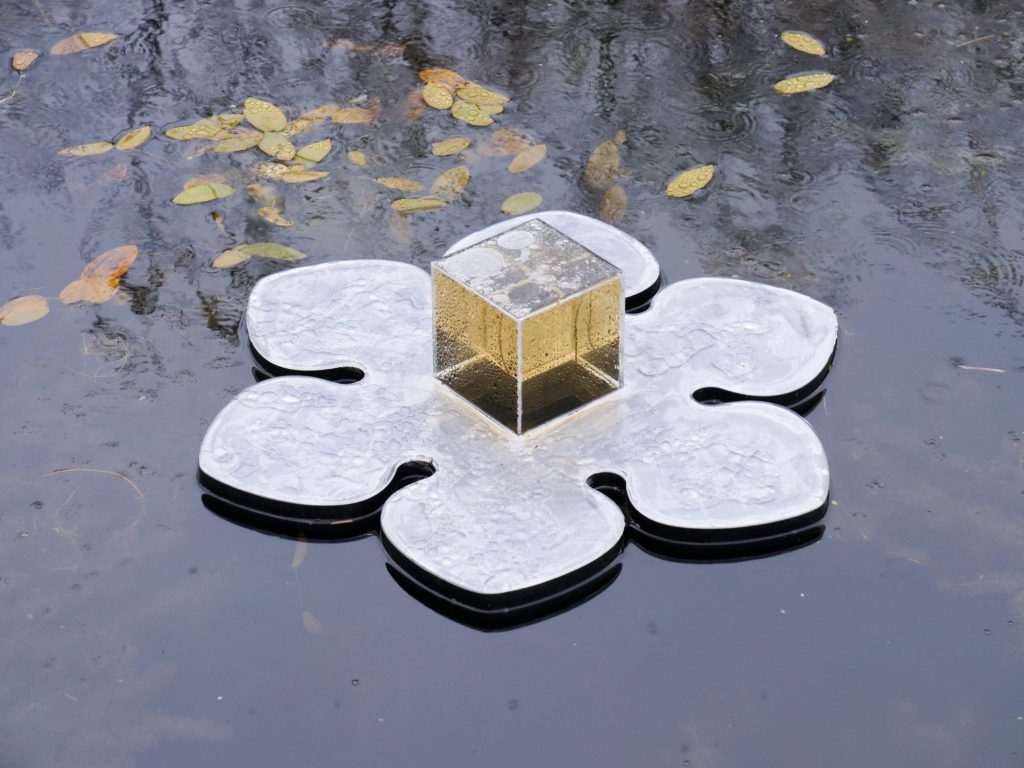
Image Credit: Finn Rabbit Dove
| Title | Price | Purpose | Condition | Build Date |
|---|