Biography

Graham Fagen lives and works in Glasgow and is Professor of Fine Art at Duncan of Jordanstone College of Art & Design, Dundee. Across sculpture, film, photography and music, his work explores identity, history, conflict, language, and cultural symbolism.

In 2015, he represented Scotland at the Venice Biennale. In 1999, he was commissioned by the Imperial War Museum as the UK’s official war artist for the Kosovo conflict. His work is held in collections including Tate, Gallery of Modern Art, Glasgow, the National Galleries of Scotland and Museum Voorlinden, Netherlands.

Fagen’s work often draws on personal experience and everyday symbols to explore ideas of belonging, memory, and identity. He is interested in how meaning is shaped through culture, history, and community.

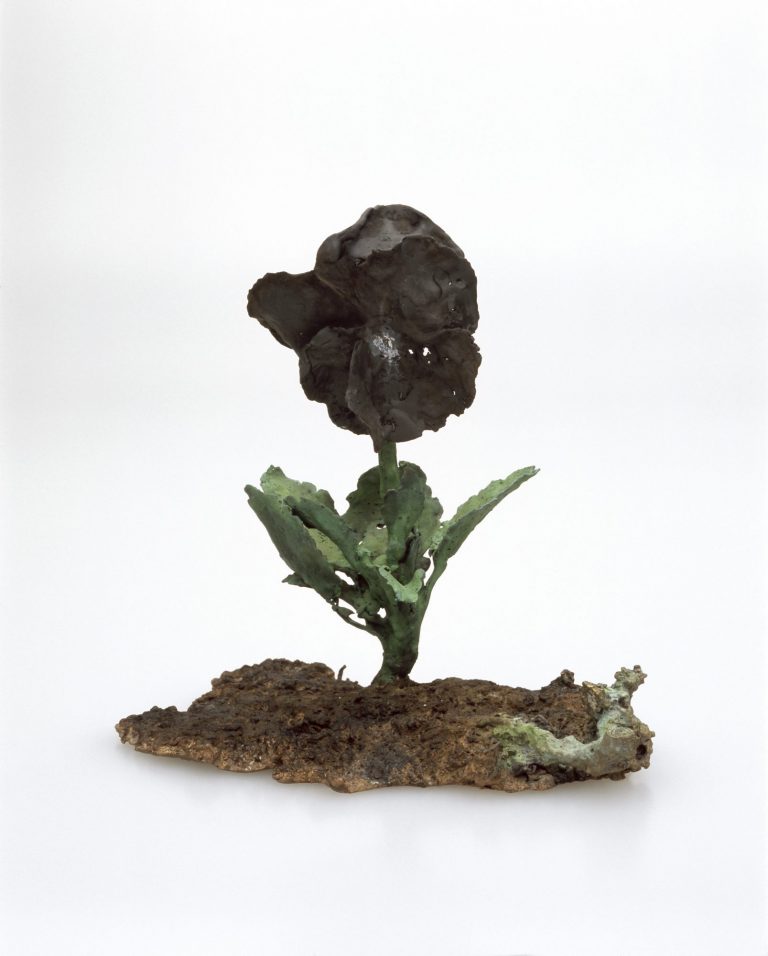
This artwork was selected by members of The Daffodil Club through SPG’s Team Sculpture programme. Graham Fagen’s Black Pansy will be displayed there until June 2027.

The inclination with sculpture is to imagine a moment captured in a still material form to be observed from a distance. Certainly in a Western modality, a sculpture is an object to be put on a plinth, separated by a rope or somehow guarded from the senses. The visual is often the only stimulant allowed. And to touch would be to break the contract of the art viewer and gallery.  This separation between the art work and a more bodily – more sensuous – experience creates a dissonance. The social anthropologist David Howes suggested that Western aesthetics separates the senses as it is unable to cope with the body, and that the whole history of the museum is about the sanitation of aesthetic experience, through this separation of the senses.  For Ursitti, the scent is something that contaminates the pristine white cube of the gallery with evidence of the body social – the visceral. As Ursitti says, “the non-visual puts the body back into the visual – it has the potential to make the gaze less distancing, colonising and voyeuristic”. We can understand Ursitti’s work as prioritising what Jim Drobnick described as ‘non-visual aesthetics’. While acknowledging that ‘aesthetics’ is a somewhat clunky or loaded term. We can more broadly understand that term as an attempt to make a place for the primacy of experience in knowledge production. To challenge that false Descartes dualism of mind and body separation into something more attuned within and interconnected to. It’s in this spirit of placing value in a deeper experience with the art object and to challenge the praxis of the gallery that’s at the core of what we do at SPG. With this new commission of sculptures by Clara Ursitti, we’re excited to find out how Ursitti’s practice can draw us closer to the potential for sculpture as a binding agent in both a social and material way.

Text taken from GOMA Blog:


Clara Ursitti often works with scent and social space, creating ephemeral installations and interventions that engage and challenge our sensory perceptions as well as the understanding that artworks are purely visual. Amik is a commission from Glasgow Museums drawing on the histories of trade and exchange in the area where the artist grew up and this city where she now lives.

The show includes sculptures, including found objects; film recordings and sound work from residencies in Canada; scent; and a whole tree ethically sourced and prepared by Glasgow-based environmental community GalGael.

A starting point for this show was castoreum, a substance extracted from the glands of beavers. Ursitti was attracted by the fact that a by-product of beaver trapping is still used by trappers in lures for the beaver, but also used in perfumery and as a natural flavouring to replace vanilla. Fascinated by the passion of those involved in beaver trapping and the fur industry, she also wanted to explore ideas of the by product – castoreum – how it is used for scent and allure to entice consumers to wear and consume it, often unaware of where it from and how that knowledge unsettles what we understand of our desire for the product. Her work also shifts the focus away from beavers’ popularity as cute animals with a view to haunting her audience with a more embodied version.

In Canada the beaver is an iconic symbol and connected very much with the identity of the country. The beaver pelt trade has been key in defining the relationship of colonial settlers with the land and the indigenous peoples that they stole it from. Through works looking at politics, the parliament, economy and exchange, Ursitti explores the connections between this building’s colonial history and the Hudson Bay Company which operated in Canada on behalf of the British Crown.

Initial research was done through a residency with White Water Gallery in North Bay, Canada in 2019. There Ursitti visited and learned from indigenous communities in the area where she was born and raised, before producing film and sound recordings during trips to Nipissing Nation Reserve and Teme Augama-Anishnabai Nation Reserve in February 2020.As part of her research in Glasgow, Ursitti collaborated with Katie Bruce, GoMA Producer/Curator, to study beaver histories in Scotland, the use of imported beaver pelts and other items contained within Glasgow Life Museums’ collection connected to the history of the city’s Royal Exchange building. The Mitchell Library’s archives also helped the artist to explore the Canadian fur trade’s ties to these shores.

Black Pansy was originally shown as part of Fagen’s solo exhibition Clean Hands Pure Heart at Tramway in 2005. The sculpture began as a hand-modelled wax form before being cast in bronze.

The work emerged from Fagen’s curiosity about the existence of an actual “black pansy” and the unusual language surrounding it. During his research he encountered descriptions of the flower as “faceless” and “gothic” — human terms applied to a plant. These associations informed both the appearance and emotional tone of the sculpture.

The pansy also carries a personal significance for the artist. Fagen has described it as his favourite flower, though one he felt unable to openly admire when younger for fear of ridicule. The sculpture became a way of reclaiming and celebrating that connection:

“I think I made the black pansy to become a champion of it. For us to be proud of what we like, to give it a face and a rightful place.”

Flowers have long held symbolic meaning within art history, particularly within still life painting and religious imagery. Fagen references traditions ranging from the floral paintings of Jan Brueghel the Elder to the symbolic use of lilies in Renaissance depictions of the Virgin Mary. Across his wider practice, flowers become carriers for personal, political, and cultural meanings.

By casting the flower in bronze, a material associated with monuments, permanence, and public memory, Black Pansy preserves something delicate and fleeting, holding its form in time.

The artwork was selected by members of The Daffodil Club, Easterhouse as part of Team Sculpture by Sculpture Placement Group.

Text taken from GOMA Blog:


Clara Ursitti often works with scent and social space, creating ephemeral installations and interventions that engage and challenge our sensory perceptions as well as the understanding that artworks are purely visual. Amik is a commission from Glasgow Museums drawing on the histories of trade and exchange in the area where the artist grew up and this city where she now lives.

The show includes sculptures, including found objects; film recordings and sound work from residencies in Canada; scent; and a whole tree ethically sourced and prepared by Glasgow-based environmental community GalGael.

A starting point for this show was castoreum, a substance extracted from the glands of beavers. Ursitti was attracted by the fact that a by-product of beaver trapping is still used by trappers in lures for the beaver, but also used in perfumery and as a natural flavouring to replace vanilla. Fascinated by the passion of those involved in beaver trapping and the fur industry, she also wanted to explore ideas of the by product – castoreum – how it is used for scent and allure to entice consumers to wear and consume it, often unaware of where it from and how that knowledge unsettles what we understand of our desire for the product. Her work also shifts the focus away from beavers’ popularity as cute animals with a view to haunting her audience with a more embodied version.

In Canada the beaver is an iconic symbol and connected very much with the identity of the country. The beaver pelt trade has been key in defining the relationship of colonial settlers with the land and the indigenous peoples that they stole it from. Through works looking at politics, the parliament, economy and exchange, Ursitti explores the connections between this building’s colonial history and the Hudson Bay Company which operated in Canada on behalf of the British Crown.

Initial research was done through a residency with White Water Gallery in North Bay, Canada in 2019. There Ursitti visited and learned from indigenous communities in the area where she was born and raised, before producing film and sound recordings during trips to Nipissing Nation Reserve and Teme Augama-Anishnabai Nation Reserve in February 2020.As part of her research in Glasgow, Ursitti collaborated with Katie Bruce, GoMA Producer/Curator, to study beaver histories in Scotland, the use of imported beaver pelts and other items contained within Glasgow Life Museums’ collection connected to the history of the city’s Royal Exchange building. The Mitchell Library’s archives also helped the artist to explore the Canadian fur trade’s ties to these shores.

What was the sculpture made from before it was cast in bronze?

I hand made the pansy in wax before it was cast into bronze.

 
A member of The Daffodil Club asked: why is the pansy black?

I became curious when I found out that there was such a plant as the black pansy. I wondered why plant growers would want to develop a plant like that, especially with a pansy which has such beautiful colour.

From memory, when I researched the black pansy, it was described as a faceless pansy. I found that strange too. Why would you describe it that way? Faceless. And why use terms that we use for people for a plant? It was also described as Gothic, I’m guessing because of its colour.


You mention having a personal connection to the flower. Could you tell us more about that?

My favourite flower is the pansy. I always kept that to myself because if I had mentioned such a thing at school, or as I found out later in life, even to an elderly lady I trusted, I would be called names, laughed at and picked on.

I think I made the black pansy to become a champion of it. For us to be proud of what we like, to give it a face and a rightful place.


The work was first shown in your 2005 exhibition Clean Hands Pure Heart. What were some of the themes within that exhibition?

Other pansy bronze sculptures were part of this exhibition (brown, yellow, white), as well as a lily, pineapple and orange, and Sceptre, which was a leek in newspaper cast in bronze.

These works were developed further after the exhibition, when I started to consider the colour terms we give to people — black, brown, yellow and white.

 
Flowers appear regularly throughout your work. Were there particular art historical references that informed this?

Through the still life history of art there are numerous works that use flowers as symbols, from Jan Brueghel the Elder with his vases of many flowers through to contemporary painters like Alison Watt and her paintings of cut rose stems.

I understand them generally as a way to capture the beauty of nature, to make it forever.

I have made many bronze plant sculptures, including rose stems and a rose bush. I think what I love about the sculptures that use bronze to capture a life — and Alison Watt’s paintings too — is that sense of captured time, of keeping forever, the life, the form, the beauty.

Selected Works

Text taken from GOMA Blog:

Clara Ursitti often works with scent and social space, creating ephemeral installations and interventions that engage and challenge our sensory perceptions as well as the understanding that artworks are purely visual. Amik is a commission from Glasgow Museums drawing on the histories of trade and exchange in the area where the artist grew up and this city where she now lives.

The show includes sculptures, including found objects; film recordings and sound work from residencies in Canada; scent; and a whole tree ethically sourced and prepared by Glasgow-based environmental community GalGael.

A starting point for this show was castoreum, a substance extracted from the glands of beavers. Ursitti was attracted by the fact that a by-product of beaver trapping is still used by trappers in lures for the beaver, but also used in perfumery and as a natural flavouring to replace vanilla. Fascinated by the passion of those involved in beaver trapping and the fur industry, she also wanted to explore ideas of the by product – castoreum – how it is used for scent and allure to entice consumers to wear and consume it, often unaware of where it from and how that knowledge unsettles what we understand of our desire for the product. Her work also shifts the focus away from beavers’ popularity as cute animals with a view to haunting her audience with a more embodied version.

In Canada the beaver is an iconic symbol and connected very much with the identity of the country. The beaver pelt trade has been key in defining the relationship of colonial settlers with the land and the indigenous peoples that they stole it from. Through works looking at politics, the parliament, economy and exchange, Ursitti explores the connections between this building’s colonial history and the Hudson Bay Company which operated in Canada on behalf of the British Crown.

Initial research was done through a residency with White Water Gallery in North Bay, Canada in 2019. There Ursitti visited and learned from indigenous communities in the area where she was born and raised, before producing film and sound recordings during trips to Nipissing Nation Reserve and Teme Augama-Anishnabai Nation Reserve in February 2020.As part of her research in Glasgow, Ursitti collaborated with Katie Bruce, GoMA Producer/Curator, to study beaver histories in Scotland, the use of imported beaver pelts and other items contained within Glasgow Life Museums’ collection connected to the history of the city’s Royal Exchange building. The Mitchell Library’s archives also helped the artist to explore the Canadian fur trade’s ties to these shores.

The 2015 Scotland + Venice presentation at the 56th International Art Exhibition at the Venice Biennale features a solo exhibition of new work by Glasgow-based artist Graham Fagen.

Commissioned and curated by Hospitalfield, Arbroath, Scotland, the exhibition Come into the Garden, and forget about the War included sculpture, drawings and a five channel audio-visual installation and took place at Palazzo Fontana, Cannaregio from 9 May-22 November 2015.

Drawing on his long-term commitment to collaboration across multiple art forms and disciplines, that artist also brought together internationally renowned composer Sally Beamish, the musicians of Scottish Ensemble, reggae singer and musician Ghetto Priest and music producer Adrian Sherwood in the creation of the audio-visual installation.

Continuing Fagen’s interest in the natural environment, a neon text entitled ‘Entra nel Giardino, e Dimentica la Guerra’ (Come into the Garden, and forget about the War) marked the threshold of Palazzo Fontana, inviting visitors into a curated ‘garden’. Rope Tree, a monumental bronze sculpture cast from lengths of rope, is installed in the first room of the palazzo. Rooted by its sheer size, the work is weighted by historic and cultural associations of rope and references the architectural reliefs often found in merchant cities such as Venice. Scheme for Lament, a series of highly intricate Indian ink drawings intuitively and repetitively made by tracing the interior and exterior of the artist’s own teeth as felt by his tongue, fill the second room; while Scheme for our Nature, sculptures of gold, silver, clay and metal, balance ceramic objects cast from faces, mouths and hands to create a field of metal frames and branches in the third room.

Fagen is one of the UK’s foremost contemporary artists. His work mixes media and crosses continents; combining video, performance, photography, and sculpture with text and music. His recurring artistic themes include plants, journeys, poetry and popular song as a means to focus on personal and shared experience and identity. His works offer a clear-sighted perspective on the powerful forces that shape our lives.

A five channel audio-visual installation by Graham Fagen
Installation view of Graham Fagen’s exhibition for Scotland + Venice at the Palazzo Fontana © 

Graham Fagen

Sculpture by Graham Fagen
Scheme for our Nature (2015), Graham Fagen. Installation view at the Palazzo Fontana © 

Graham Fagen

Installation view of Graham Fagen's exhibition for Scotland + Venice at the Palazzo Fontana
Installation view of Graham Fagen’s exhibition for Scotland + Venice at the Palazzo Fontana © 

Graham Fagen

Rope Tree (2015), Graham Fagen. Installation view at the Palazzo Fontana © 

Graham Fagen

In 2016, Fagen reinterpreted the body of work originally conceived for the four noble rooms of Palazzo Fontana. In Arbroath the exhibition of sculpture, drawing and moving image was installed, with some changes and additions, in to the lovely and various historic Arts & Crafts rooms of Hospitalfield House. The exhibition ran from 19 March until 17 April 2016 with a series of events focused around the start and end of the show.
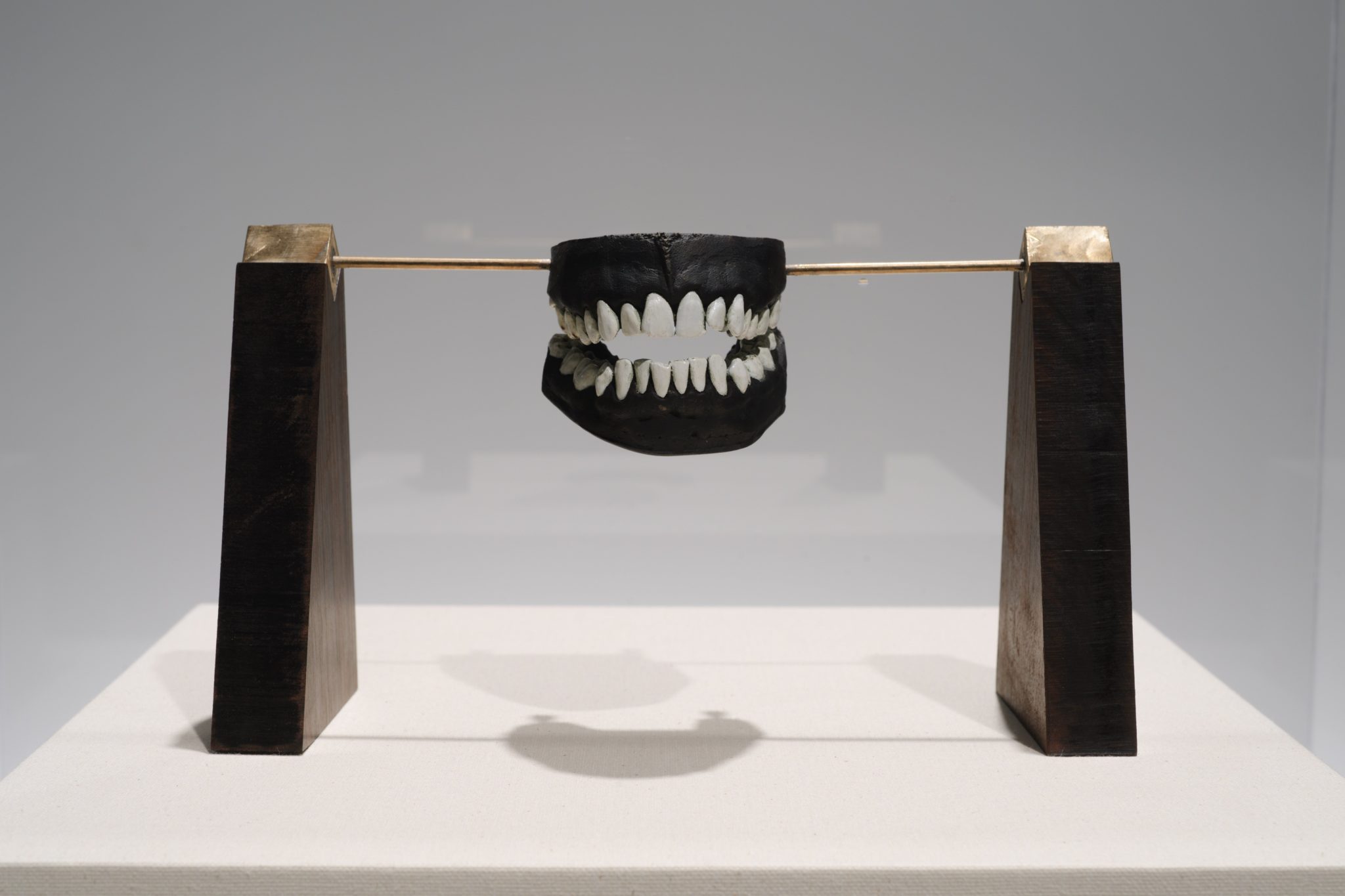
Our Shared, Common Private Space (2015), Under Heavy Manners, Artsspace, San Antonio. Todd Johnson © 

Graham Fagen’s exhibition, Under Heavy Manners, builds on two decades of work dedicated to examining the ways in which culture is produced and negotiated by people and objects. At Artpace, he has focused his attention on human teeth as a symbolic means to understand complex physical and emotional relationships. In the drawings, video, and sculpture that comprise his installation, he explores teeth simultaneously as objects of intense scrutiny and mediators of human interaction, both intimate and aggressive. He likens them to architecture, suggesting that these prominent and expressive facial structures operate like the façade of a building, demarcating the line between the public realm outside the body and the private realm inside the mind. Straddling the boundary between the self and the other, teeth stand as both a part of and apart from the body.

Two inky specters-both self-portraits on paper-bare their grotesquely distorted and uneven jaws in the space. Far from traditional portraiture, these haunting images depict the shape and size of Fagen’s teeth as he felt them while probing the interior of his mouth with his tongue. Tongue Behind Teeth, the wider, looser silhouette, represents the sensation of running his tongue along the contoured backsides of his teeth, while the neater and narrower bite, Tongue in Front of Teeth, depicts his tongue’s path along their front. The difference between the two drawings suggests the discrepancies between an individual’s self-perception and the way he or she might be perceived by others. Felt from the inside, the teeth and interior of the skull seem nebulous and complex. From the outside, the space they contain seems small and compact.

Themes of bodily perception and judgment are further developed in the second component of Fagen’s installation, Heavy Manners, a four-minute video loop projected in an open space carved out in rear of the gallery by two black theater backdrops. The piece opens with a full-body shot of a lone cellist sitting in an empty room. She begins to perform a deeply sonorous and droning rendition of The Slave’s Lament, a poem by the Scottish writer Robert Burns (who is most famous for having written the lyrics of the New Year’s favorite Auld Lang Syne). Fagen has explored the poet’s connections to slavery in previous works; this time, he invokes human captivity as a metaphor to examine complicated relationships brought about by and expressed in bodily interactions. Building upon his investigation of teeth as an architectural boundary between the self and other, his video makes reference to the common slave trade practice of judging the health and value of a human being by examining his or her mouth.
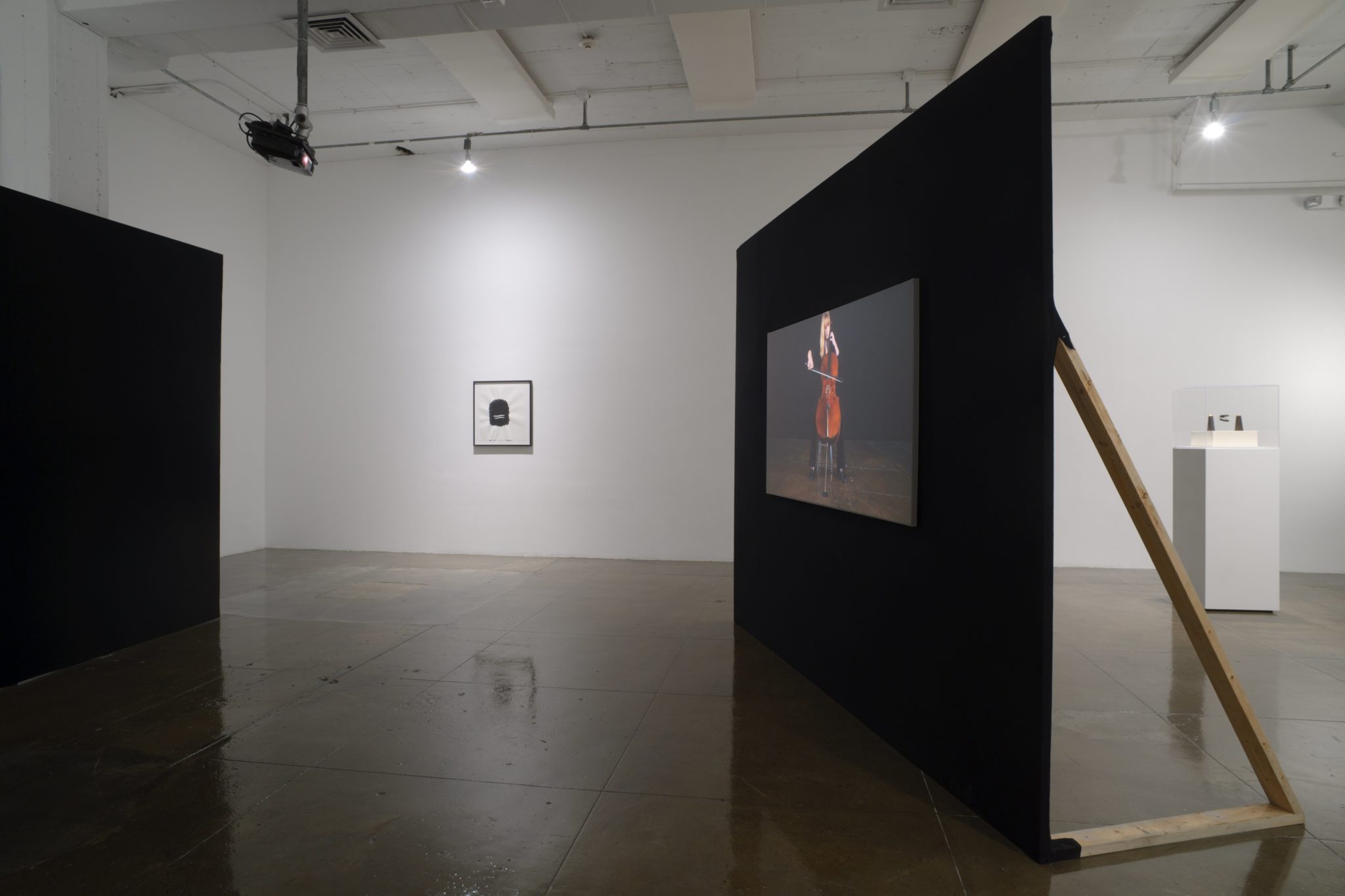
Installation view of Graham Fagen’s exhibition Under Heavy Manners (2015). Todd Johnson © 

In a series of very close shots, four actors carry out what could be either a sacred ritual or medical examination. One at a time, a pair of hands dips into an unseen basin; they glisten as they rub together slowly and methodically, shimmering droplets of water dripping from their fingertips. Next, arms join together and one pair of hands caresses and carefully inspects the other. Suddenly, the arms switch places and roles. The same two pairs of arms are linked, but the hands that were being inspected are now doing the inspecting. Successive cuts elaborate this ritual of exchange and inspection: one at a time, a different pair of disembodied hands manipulates the head of each individual-twisting it, brushing aside hair, peeling open eyelids, and tugging at lips to examine teeth. At first, the touching seems almost tender, but as the notes of the cello become rough, so does the handling of the bodies. Finally, as a cluster of arms envelops each body and pulls it off-screen, it becomes unclear whether they are offering a loving embrace or a suffocating grip. As the footage returns to the image of the cellist, we notice that she coaxes the notes from her instrument with the same ambiguous combination of tenderness and violence. By positioning each character in the roles of both examiner and examined object, Fagen complicates our perception of the relationship between slave and master. As the hands move from tender to rough and the cycles repeat, we witness an allegory of the depth and complexity of human relationships, in which the roles of caretaker, aggressor, lover, and victim are never exact and are always changing.

The exhibition culminates with Our Shared, Common, Private Space, an impression of the artist’s teeth cast in bronze and stained with black patina. Perched above an unusually tall pedestal, the bronzed dentures are positioned at the height they would be if attached to a living, breathing body. Suspending them in mid-air, Fagen sculpts the space around the jaws, challenging the viewer to examine them from all sides and fill in the missing architecture. Imagining a body and voice for the disembodied and objectified teeth places the viewer in the role of the examiner, and whether or not our judgment is fair, the sculpture remains silent without us to speak for them.
© Graham Fagen. All rights reserved, DACS, London 2023. Reproduced courtesy of the artist and Artimage.


About this artwork

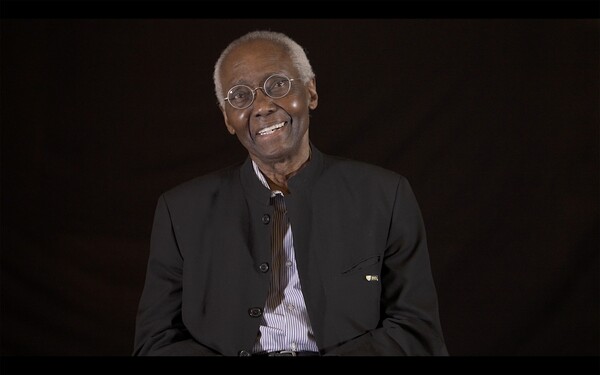
Sir Geoff Palmer OBE (1940–2025) was a life-long human rights activist and historian of Scotland’s relations with the Caribbean. His story is a remarkable one. After leaving Jamaica for London in 1955 aged 14, he attended school in the city, eventually continuing his studies at Leicester, Edinburgh and Heriot-Watt universities. As a scientist, his research at the Brewing Research Foundation from 1968–77 led to the discovery of the barley abrasion process – which makes the malting process more efficient. For this research, he was awarded the American Society of Brewing Chemists Award of Distinction in 1998.

In 1989, Sir Geoff became the first Black university professor in Scotland. He is the author of a critically acclaimed book, The Enlightenment Abolished: Citizens of Britishness, in which he argued for maintaining but reinterpreting public monuments associated with the transatlantic slave trade. Artist Graham Fagen worked in collaboration with Sir Geoff to create a portrait which, in Fagen’s own words attempts to ‘expand our perceptions on portraiture in the age of the selfie.’

Compare Listings

Title Price Purpose Condition Build Date